Jersey City: A Modern Guide to Shopping, Dining, and Waterfront Living
If you’re looking to experience some of the best shopping, dining, and waterfront views in New Jersey, there’s no better place than Downtown Jersey City. Widely regarded as one of the city’s most desirable neighborhoods, Downtown Jersey City has undergone an impressive transformation over the past two decades, becoming a premier destination for visitors, professionals, and residents alike.
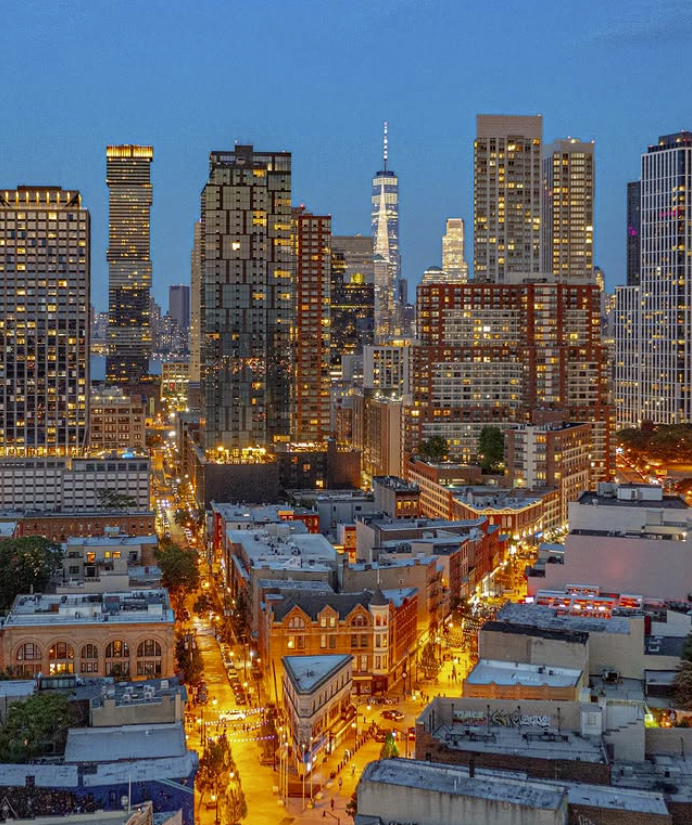
Much of this revitalization can be credited to the Historic Downtown Special Improvement District (HDSID), which partnered with property owners, small businesses, and city officials to improve safety, cleanliness, and walkability. Today, Downtown Jersey City seamlessly blends its historic core with the modern Hudson River Waterfront, connecting neighborhoods like Newport, Paulus Hook, and Exchange Place. With a growing mix of retail boutiques, restaurants, fitness studios, cultural spaces, and nightlife, Downtown Jersey City has become a must-visit destination—especially for travelers seeking an alternative to Manhattan.
A Brief History of Downtown Jersey City
Like much of northern New Jersey, Downtown Jersey City was originally inhabited by the Lenape Native American tribes before European settlers arrived. The area later played a strategic role during the American Revolutionary War, thanks to its proximity to New York Harbor and major transportation routes.
By the 19th century, Downtown Jersey City developed into a dense urban neighborhood lined with brownstones, row houses, and industrial buildings. Many of these former factories and warehouses have since been reimagined as residential lofts and mixed-use developments. One notable example is Dixon Mills, a former pencil factory turned sought-after residential complex that perfectly reflects the neighborhood’s adaptive reuse movement.
Harsimus: Historic Charm Meets Modern Urban Living
Harsimus is one of Downtown Jersey City’s most historically rich neighborhoods, known for its 19th-century row houses and strong preservation efforts. Much of Harsimus was developed in the 1830s by merchant John B. Coles, with growth accelerated by its access to railroads and waterfront shipping routes.
The construction of railyards in the late 1800s transformed Harsimus into a bustling transportation hub, though economic decline followed mid-century as shipping shifted toward Port Newark. Beginning in the 1970s, the neighborhood experienced a major turnaround, fueled by historic preservation, affordable rents, and mass transit access that attracted artists and creatives.
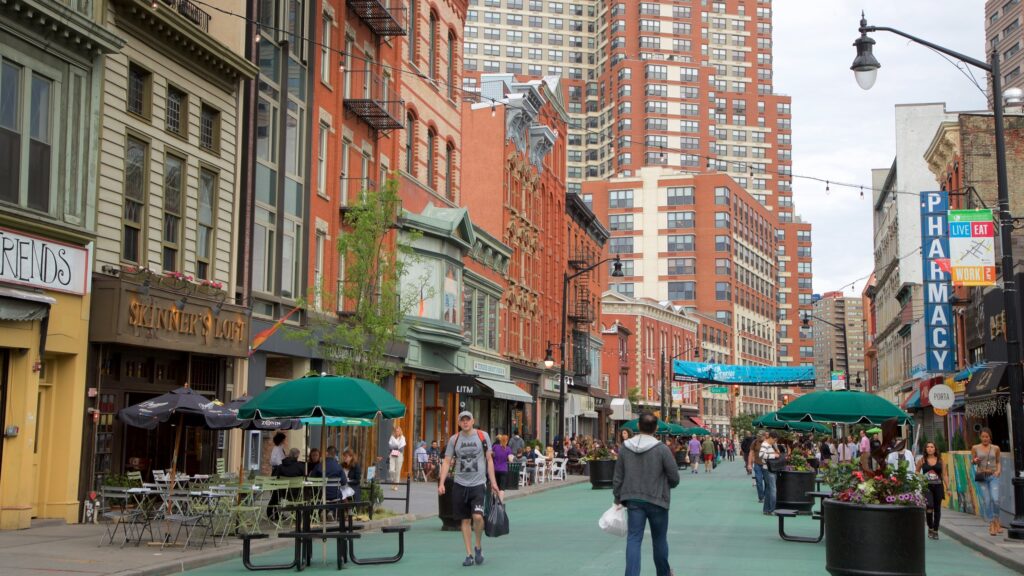
Today, Harsimus is anchored by the Newark Avenue Pedestrian Mall, one of Jersey City’s liveliest corridors. Lined with restaurants, cafés, bars, and boutiques, the pedestrian plaza also hosts seasonal events, outdoor dining, and street festivals, making it a central gathering point for locals and visitors alike.
The Village: Jersey City’s Historic “Little Italy”
Just west of Harsimus lies The Village, a smaller historic neighborhood once known as Jersey City’s own Little Italy. While quieter than surrounding districts, The Village offers a charming mix of cafés, wine bars, and family-owned restaurants ideal for travelers seeking a slower pace.
The neighborhood is home to St. Anthony of Padua Catholic Church, built to serve Polish immigrants and now listed on the National Register of Historic Places. Nearby stands White Eagle Hall, a former community center that has been beautifully restored and reopened as one of Jersey City’s most respected live music and performance venues.
Powerhouse Arts District: Creativity on the Waterfront
The Powerhouse Arts District sits along the Hudson River and is defined by its industrial past and creative present. Once filled with warehouses and rail infrastructure, the district became a haven for artists drawn by affordable loft spaces and waterfront views.
At the heart of the neighborhood stands the historic Hudson & Manhattan Railroad Powerhouse, which gave the district its name. While new high-rise development proposals—including a potential record-breaking skyscraper—continue to spark debate, the Powerhouse Arts District remains a vibrant mix of galleries, restaurants, bars, and residential spaces, making it a popular destination for nightlife and dining.
Newport: Shopping, Dining, and Corporate Energy
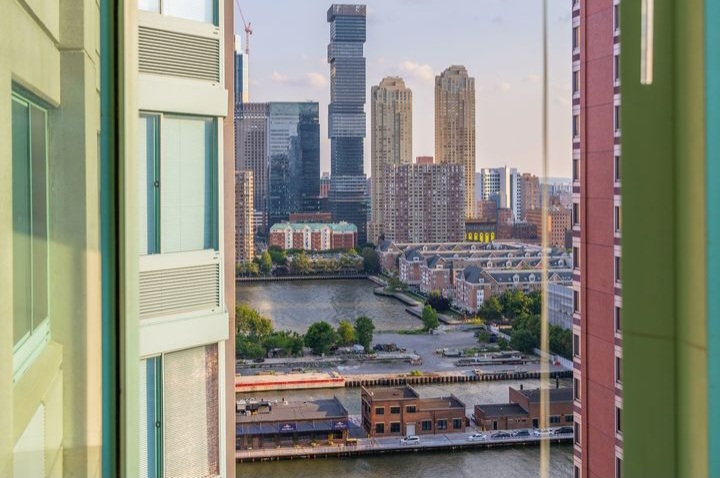
Redeveloped beginning in the mid-1980s by The LeFrak Organization, Newport is a master-planned waterfront community that blends residential towers, office space, hotels, and retail. It is home to more than five million square feet of office space, housing major corporations such as JP Morgan Chase, Citi, L’Oréal, and Forbes.
For visitors, Newport offers convenient shopping at Newport Centre Mall, featuring over 150 stores, AMC Theatres, and major retailers. The nearby Newport River Market adds casual dining options and everyday conveniences, all set against sweeping views of the Manhattan skyline.
Paulus Hook: Waterfront Views and Upscale Dining
Paulus Hook is one of Downtown Jersey City’s most picturesque neighborhoods, known for its tree-lined streets, waterfront promenades, and historic significance. Originally settled by the Lenape and later fortified during the Revolutionary War, Paulus Hook has evolved into a highly desirable residential and dining destination.
Today, Morris Street and Washington Street are packed with top-rated restaurants, wine bars, and cafés, offering everything from European bistros to modern American cuisine. The neighborhood’s waterfront provides some of the best skyline views of Lower Manhattan, making it a favorite stop for visitors and photographers.
Exchange Place: Jersey City’s Wall Street West
Often called “Wall Street West,” Exchange Place is Jersey City’s financial and transportation hub. Built on reclaimed land along the Hudson River, Exchange Place has served as a transit center since the 18th century and remains a vital connector via PATH trains, ferries, and the Hudson-Bergen Light Rail.
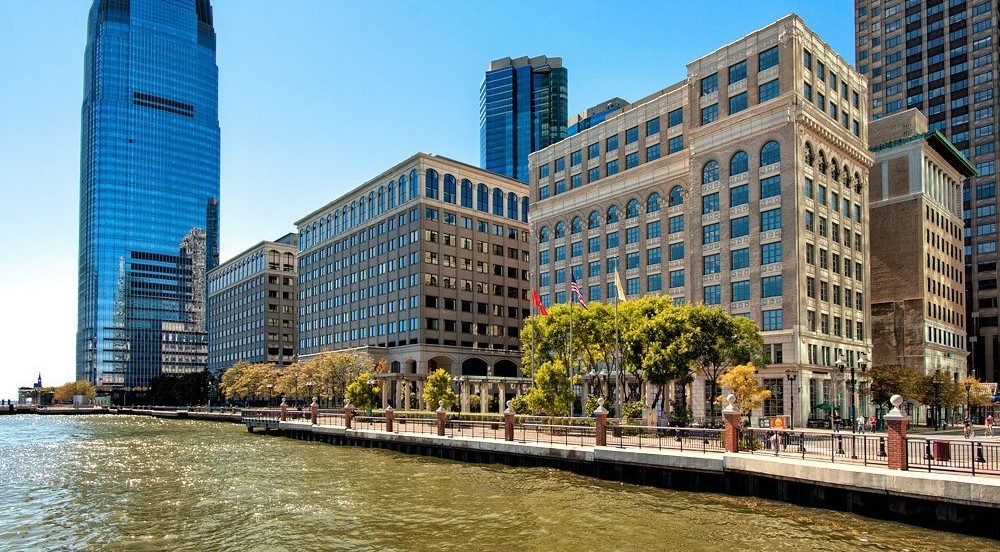
The district is home to two of New Jersey’s tallest buildings—99 Hudson and the Goldman Sachs Tower—along with luxury apartments, rooftop lounges, and waterfront dining. Exchange Place’s promenade offers some of the most iconic views in the region, rivaling those of Brooklyn Heights.
Hamilton Park and Van Vorst Park: Residential Beauty and Community Life
North of Harsimus, Hamilton Park is a Victorian-era green space surrounded by colorful row houses and local businesses. The park hosts farmers markets, outdoor movie nights, festivals, and concerts, making it a true community hub year-round.
Further south, Van Vorst Park offers a quieter residential atmosphere with historic architecture reminiscent of Manhattan’s Washington Square Park. Renovated in the early 2000s, the park now features playgrounds, gazebos, and seasonal events, making it ideal for families and travelers seeking a peaceful retreat.
Getting Around Downtown Jersey City
With so many neighborhoods, shops, and dining destinations to explore, transportation plays a key role in any visit. While public transit options like PATH and light rail are available, many visitors prefer the comfort and convenience of a private car service or limo service in Jersey City.
Booking a black car service to Downtown Jersey City allows travelers to move easily between neighborhoods, waterfront attractions, shopping districts, and nearby airports like Newark Liberty International Airport (EWR). Many professional car services also offer hourly transportation, ideal for shopping trips, dining tours, or holiday events.
Plan Your Visit to Downtown Jersey City
From historic neighborhoods and waterfront parks to luxury high-rises and cultural venues, Downtown Jersey City offers something for every traveler. Whether you’re visiting from New York City, Connecticut, or Pennsylvania, the area is easily accessible and well worth exploring.
If you’re planning a shopping trip, dining experience, or holiday visit, consider reserving a professional limo or black car service to Jersey City for a seamless, stress-free experience. With so much to see and do, Downtown Jersey City isn’t just a destination—it’s an experience.
Comments are closed